
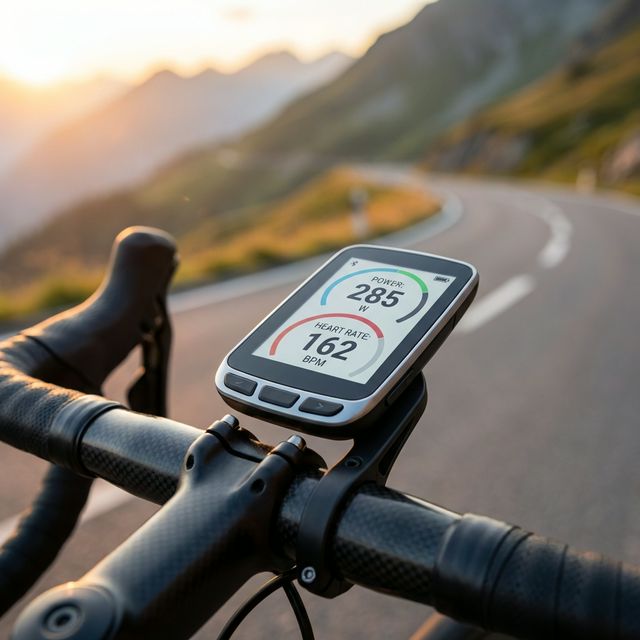
Subtitle: Your heart rate says interval, but your power says recovery. Who should you trust?
In the era of smart trainers and power meters, heart rate can feel secondary. But athletes still panic when heart rate drifts higher on easy rides.
A recent Enduroco question from Arjun captured this: “Easy ride, easy label, but HR was about 10 bpm higher than usual. Will AI penalize me?”
The noise in heart rate
Arjun’s spike came from using a rocker plate for the first time, engaging more muscles.
Heart rate is a stress response, but stress has many sources:
- heat
- caffeine
- anxiety
- dehydration
- poor sleep
Power is truth, HR is context
As Coach Ankit noted, power plus RPE remains the most reliable anchor for structured execution.
- Power reflects mechanical work.
- Heart rate reflects current physiological cost.
Using HR alone can mislead interval timing (cardiac lag) or underload long endurance rides (cardiac drift).
When HR matters most
Heart rate remains a critical warning system.
- Suppressed response: cannot raise HR during hard work may indicate deep fatigue.
- Elevated resting HR: often an early illness or recovery warning.
- Heat blocks: HR caps can improve safety while adapting.
Conclusion
Power tells you what you are doing. Heart rate tells you how your body is coping with it. Train by power and RPE, but monitor HR for context and recovery signals.