Whether you’re an amateur enthusiast or an elite endurance athlete, catching the training bug often leads to a hyper-focus on intense workouts, while recovery phases are frequently cast aside. Many athletes are haunted by the misconception that taking a rest day means losing hard-earned physiological adaptations.
In reality, to experience a true decline in fitness, you would need to completely stop training for several weeks. Rest days and strategic recovery periods have the exact opposite effect: they are the foundational blocks that enable performance gains. Incorporating structured regeneration is an absolute necessity in any successful training program.
In this guide, we explore the critical role of active recovery, identify the best low-intensity activities, and discuss how to properly space out your intense training sessions.
Why Prioritize Regeneration?
Consistent training demands a balanced approach that pairs a structured plan with proper nutrition and adequate sleep. Think of recovery as a pyramid: nutrition and mental relaxation form the base, while quality sleep serves as the peak. These three pillars ensure your body heals and adapts for your next workout.
This adaptation process is why recovery is so crucial. Both strength and endurance training apply targeted stress to your body. Your muscles, tendons, ligaments, metabolism, and nervous system constantly evolve to handle these stimuli better. Without recovery, this adaptation simply cannot occur.
During rest, glycogen stores in your muscles and liver are restocked, and vital amino acids are synthesized to repair muscle fibers. This primes your body for the next challenge.
Skipping recovery leads to poor healing, an inability to absorb training stress, and depleted energy stores. Ultimately, this results in burnout, plateaus, or a significant drop in performance.
The Power of Active Recovery
Continuously pushing yourself without adequate rest is neither sustainable nor effective for achieving peak performance. While passive recovery—like relaxing on the couch with a good movie—is incredibly important, there is another highly effective method: active recovery.
Active recovery involves low-intensity movement that promotes blood flow without taxing your body. You should never approach your physical limits during these sessions. The goal is to engage in activities that place minimal stress on your cardiovascular system and musculoskeletal structure.
The Golden Rule: The intensity of your active recovery should never exceed 70% of your maximum effort, and ideally, it should remain well below that threshold.
Benefits of Staying Active
Gentle muscle movement stimulates blood circulation, which accelerates the removal of metabolic waste products and speeds up the repair of damaged tissues.
Increased blood flow also delivers more nutrients directly to the muscles, enhancing the repair process. Furthermore, activating your muscles helps flush out accumulated fluid, reducing stiffness. It also aids in clearing blood lactate more efficiently, which minimizes delayed onset muscle soreness (DOMS).
Best Methods for Active Recovery
You can easily integrate active recovery into your existing plan. For example, during intensive marathon preparation, scheduling a very light jog or a brisk walk on your rest days can be highly beneficial.
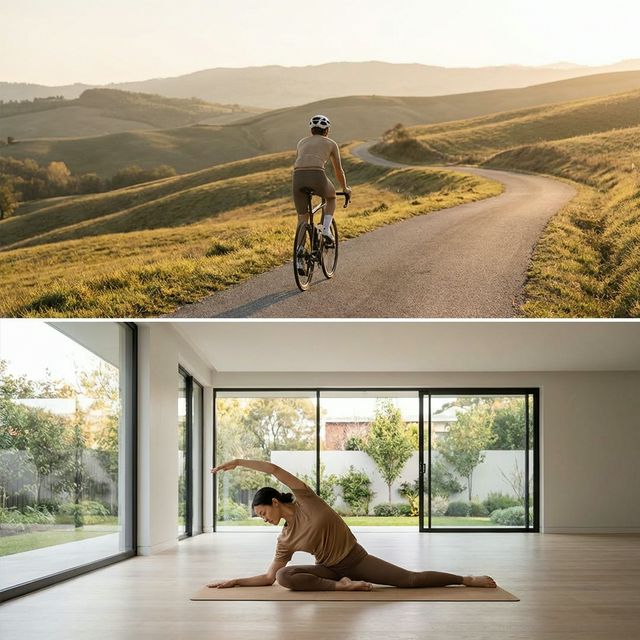
Cross-training is an excellent way to actively recover. Runners can benefit immensely from a relaxed bike ride, an easy swim, or even inline skating. This not only recruits different muscle groups but also provides a mental break from the monotony of running.
Here are some of the most effective active recovery strategies:
Cool Down and Stretching
Active recovery actually starts immediately after your hard workout. A proper cool-down—such as a slow 10-minute jog or walk after a track session—lowers your heart rate gradually. Follow this with a round of gentle, static stretching to maintain flexibility.
Yoga
Light yoga sessions are perfect for rest days. Yoga provides physical and mental relaxation while gently elongating your musculoskeletal system. It improves mobility and stimulates blood flow, aiding in the removal of metabolic byproducts and reducing systemic inflammation.
Stability and Mobility Work
Incorporating light core workouts or dynamic mobility routines prepares your body for future stress. These sessions shouldn’t leave you breathless; rather, they should focus on form and injury prevention.
Foam Rolling and Self-Massage
Techniques like foam rolling or using massage guns stimulate circulation and relieve muscle tension. They help break down fascial adhesions and relax tight musculature that has been battered by heavy training blocks.
Temperature Therapy
While debated in sports science circles, modalities like saunas, ice baths, and contrast showers are wildly popular. Some athletes swear by the deep relaxation of a sauna, while others praise ice baths for reducing localized swelling. While definitive scientific consensus on their physiological benefits is mixed, the psychological relaxation they provide can be a powerful recovery tool. If a method makes you feel rejuvenated, it’s worth including.
How Long Should You Recover Between Sessions?
Figuring out the exact duration needed between workouts is highly individual. It depends heavily on your age, baseline fitness, and the intensity of your previous session.
While a light, low-resistance spin on a stationary bike can be done daily, the heavy muscular and neurological tax of a VO2 Max running session or a heavy leg day requires at least 24 to 48 hours of recovery for the specific muscle groups involved.
High-intensity efforts drastically deplete your glycogen stores, which inherently require at least a full day to restock—provided you are fueling properly and hydrating sufficiently.
Always listen to your body. If you are experiencing sharp joint pain, it’s better to take an extra day off than risk a season-ending injury.
The Enduroco app takes the guesswork out of this process by generating a highly individualized, dynamic training plan. The built-in AI analyzes your recent training loads, performance metrics, and fatigue levels to automatically schedule appropriate recovery days, ensuring your progress is both sustainable and optimal.
Train Smarter with Active Recovery
Reaching your full athletic potential isn’t just about how hard you can push; it’s equally about how well you can recover. By balancing intense training with active regeneration and smart nutrition, you ensure long-term, injury-free progress.