
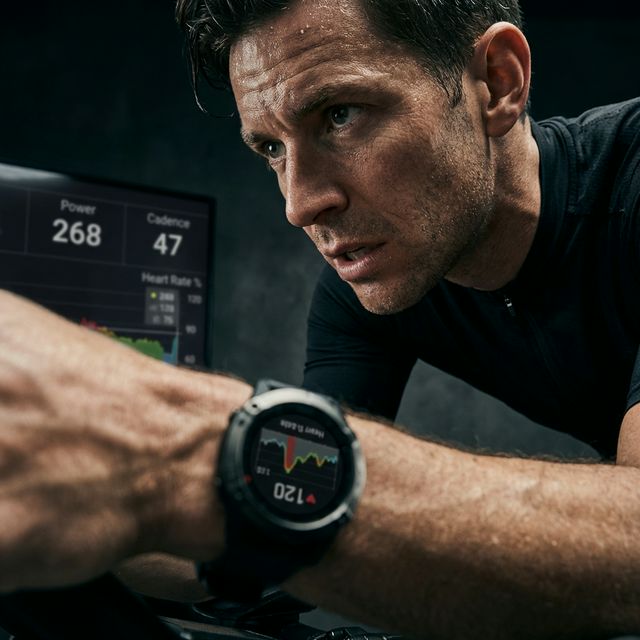
When aiming for smart, effective progress, grasping exactly how your body reacts to physical stress is paramount. This brings us to the dual concepts of external and internal training load. These advanced training metrics track both the objective amount of work you are logging and the subjective toll that work takes on your system.
But what is the practical difference between them, and why must you measure both? In this breakdown, we dissect the objective and subjective pillars of training load.
The Necessity of Load Monitoring
Consistently monitoring your physiological stress and subsequent recovery responses is a non-negotiable aspect of any individualized training protocol (Halson, 2014). During grueling training blocks, coaches and athletes alike must walk a razor-thin tightrope: maximizing beneficial physical adaptations on one side, while completely avoiding burnout and overtraining on the other (Buchheit et al. 2013).
Precision in both planning and controlling your training load allows you to spot detrimental physiological red flags early on, providing you the runway to tweak your upcoming sessions accordingly.
Defining Internal vs. External Load
According to prominent sports science literature, these two monitoring paradigms are distinct but highly interconnected methods for tracking athletic progression.
External Load (The Objective Output)
External parameters consist almost entirely of cold, hard, objective metrics. This includes the wattage you push on the pedals, the pacing of your intervals on the track, and the total duration of your sessions. Collectively, these inputs determine the raw intensity of your workouts.
However, looking strictly at wattage or velocity paints an incomplete picture. The same 250-watt output could feel entirely different depending on whether you slept 8 hours or 4 hours the night prior.
Because of this, sports scientists heavily employ the Rating of Perceived Exertion (RPE) scale, pioneered by Gunnar Borg. The true total training load of a session is frequently calculated by multiplying this subjective RPE value by the total duration of the workout in minutes (Foster 1998).
Internal Load (The Physiological Toll)
Internal load measures the actual biological and psychological toll the external load exacts on your body. These are your physiological responses.
Internal metrics include blood markers (like lactate accumulation), resting heart rate, heart rate variability (HRV), heart rate recovery, and mental fatigue state. While some metrics like blood pulls are highly invasive and impractical for daily amateur use, tracking HRV and resting heart rate has become highly democratized via modern wearables.
Psychometric self-evaluations are also heavily utilized to track internal strain. Long questionnaires are tedious, so succinct mental check-ins are vastly preferred to ensure consistency. At Enduroco, we utilize systems deeply rooted in proven psychological models, such as the Hooper Index, which is extraordinarily sensitive to recognizing spikes in an athlete’s mental and physical stress.
The Big Picture Integration
In short, the external training load is the prescribed physical dosage of your training program, while the internal load is your body’s psychophysiological reaction to that exact dose.
It is absolutely crucial to note that regardless of which metrics you prioritize, establishing a solid individual baseline over several weeks is mandatory before you can begin drawing meaningful conclusions from the data.